

* Corresponding author: Mohsen Jafarian Dehkordi, Department of Microbiology, Pasteur Institute of Iran, Tehran, Iran. Email: mjafariand@yahoo.com
Article DOI: 10.22034/cmja.15.4.311
Received: 01 July 2025 | Accepted: 05 January 2026
How to Cite This Article: Zamanian Dehkordi SM, Zavarshani M, Jafarian Dehkordi M, Asgari M, Zavarshani M. Effect of Hydroalcoholic Extract of Pistacia atlantica Fruit on the Formation of Glycated Hemoglobin (HbA1c) in Human Blood Sample Under In Vitro Conditions. Complement Med J. 2025;15(4):311–321. doi: 10.22034/cmja.15.4.311
Abstract
Introduction and Objective
Glycated hemoglobin (HbA1c) is an important indicator of long-term glycemic control and is associated with the development of diabetes-related complications. Non-enzymatic glycation contributes to the formation of advanced glycation end products (AGEs). Pistacia atlantica is an Iranian medicinal plant containing phenolic and terpenoid constituents with reported antioxidant properties. This study investigated the effect of its hydroalcoholic fruit extract on HbA1c formation in human blood-derived hemoglobin under in vitro hyperglycemic conditions.
Materials and Methods
This in vitro experimental study used 20 mL of venous blood from one healthy adult donor without diabetes or other metabolic disorders. Fruits of Pistacia atlantica were collected in the mountainous areas of Chaharmahal and Bakhtiari Province, Iran, and authenticated (herbarium code D-7400). A hydroalcoholic extract was prepared from 100 g of fruit powder using 400 mL of solvent consisting of 300 mL ethanol and 100 mL distilled water. The mixture was shaken for 48 h at 25°C and 150 rpm, filtered through Whatman No. 1 paper, and freeze-dried at −50°C and 0.01 mbar. Working solutions were prepared at 0.1, 0.5, and 1 g/dL. Hemoglobin was isolated from washed erythrocytes following centrifugation and lysis using 0.01 M phosphate buffer and carbon tetrachloride. Hemoglobin samples were exposed to glucose at 20 or 40 mM and treated with the extract concentrations. Each experimental group was prepared in duplicate; gentamicin (50 μL of a 40 mg/mL solution) was added to prevent contamination. Samples were incubated in sealed 2-mL polypropylene microtubes for 7 or 14 days at 37°C in the dark, using phosphate buffer maintained at pH 7.4 ± 0.1. HbA1c was measured using a colorimetric kit (Mahsayaran, Iran) and spectrophotometry at 433 nm. Data were analyzed using one-way ANOVA followed by Tukey’s post hoc test in SPSS version 26; P<0.05 was considered statistically significant.
Findings / Results
At 20 mM glucose after 7 days, only the 0.1 g/dL extract concentration significantly reduced HbA1c relative to the positive control (8.56 ± 0.071% vs. 9.22 ± 0.106%; reported reduction, 7.16%; P<0.05). At day 14, all three extract concentrations significantly reduced HbA1c compared with the positive control: 7.62 ± 0.070% at 0.1 g/dL (16.72% reduction), 8.66 ± 0.071% at 0.5 g/dL (5.35% reduction), and 8.91 ± 0.134% at 1 g/dL (2.62% reduction; all P<0.05). At 40 mM glucose after 7 days, all concentrations significantly reduced HbA1c: 16.12 ± 0.073% (22.04% reduction), 16.57 ± 0.098% (19.87% reduction), and 18.07 ± 0.113% (12.62% reduction) at 0.1, 0.5, and 1 g/dL, respectively (all P<0.05). At day 14, significant reductions persisted at 0.1 and 0.5 g/dL (15.11 ± 0.149%, 10.38% reduction; and 15.94 ± 0.049%, 5.46% reduction, respectively; P<0.05), whereas 1 g/dL did not reduce HbA1c relative to the positive control and was associated with a reported 3.03% increase (17.37 ± 0.042%). Across the experimental conditions, the greatest inhibitory effect was generally observed at 0.1 g/dL, and the effect varied with dose, glucose concentration, and incubation duration.
Conclusion
The hydroalcoholic extract of Pistacia atlantica fruit showed potential to inhibit HbA1c formation in this in vitro model, with the strongest and most consistent effect at 0.1 g/dL. The findings suggest a concentration- and time-dependent response. Because the study used hemoglobin from a single donor, did not characterize the extract phytochemically, and did not directly measure AGEs, further mechanistic, in vivo, and clinical studies are required before clinical relevance or therapeutic use can be established.
Introduction and Objective
Diabetes mellitus is one of the most prevalent chronic metabolic disorders worldwide. It is characterized by impaired insulin secretion or action and persistently elevated blood glucose (hyperglycemia). Inadequate disease control can lead to a broad range of acute and chronic complications affecting multiple organ systems. Acute complications include severe hyperglycemia and diabetic ketoacidosis, which may be life-threatening. Chronic complications largely result from progressive vascular injury and are classified as microvascular complications, including retinopathy, nephropathy, and neuropathy, and macrovascular complications, including cardiovascular disease, stroke, and peripheral arterial disease (2, 1).
Evidence indicates that chronic hyperglycemia contributes to the initiation and progression of diabetic complications through specific biochemical processes, particularly non-enzymatic protein glycation. This process, known as the Maillard reaction, begins when the carbonyl groups of reducing sugars react with amino groups in proteins and can ultimately lead to the formation of advanced glycation end products (AGEs). AGEs alter the physicochemical properties of proteins, impair their normal function, and contribute to diabetes-associated tissue damage. Accordingly, limiting AGE formation is considered an important strategy for reducing diabetic complications (3).
Under hyperglycemic conditions, glucose enters erythrocytes by facilitated diffusion and reacts with hemoglobin, resulting in glycated hemoglobin (HbA1c). Because this process occurs progressively and is effectively irreversible over the approximately 120-day lifespan of erythrocytes, HbA1c is a reliable marker of long-term glycemic control. Elevated HbA1c reflects chronic hyperglycemia and may also contribute to the formation of hemoglobin-derived AGEs (Hb-AGEs) (5, 4).
In recent years, medicinal plants have attracted attention as complementary sources of compounds that may inhibit glycation and reduce the formation of glycated proteins. Plant-derived bioactive compounds, including polyphenols, flavonoids, and terpenoids, may limit AGE formation by inhibiting glycation reactions and reducing oxidative stress. Although antidiabetic effects of many medicinal plants have been reported in vivo, direct in vitro investigations using human hemoglobin to assess effects on HbA1c formation remain limited. In vitro reductions in HbA1c have been reported for extracts of Citrullus colocynthis, Rosa damascena, Anethum graveolens, and garlic (9, 8, 7).
Pistacia atlantica, commonly known in Iran as mountain pistachio or wild pistachio, is a native species of the genus Pistacia that is widely distributed in mountainous and semi-arid regions of the Middle East. Chromatographic phytochemical investigations have identified a diverse range of bioactive constituents, including monoterpenes and sesquiterpenes such as α-pinene, β-pinene, limonene, and β-caryophyllene, as well as phenolic compounds with substantial antioxidant activity. These constituents have been associated with the inhibition of oxidative stress, modulation of inflammatory pathways, and reduction of harmful chemical reactions in biological systems. Traditional use of P. atlantica for inflammatory and metabolic disorders is consistent with these reported phytochemical and bioactive properties. Experimental studies have also suggested that P. atlantica extracts may influence diabetes-related processes through antioxidant effects and modulation of glucose metabolism (11, 10).
The present study was therefore designed to investigate the effect of hydroalcoholic extract of P. atlantica fruit on HbA1c formation, an early marker and a biochemical precursor associated with the formation of AGEs, in human blood-derived samples under in vitro conditions.
Materials and Methods
Plant Collection and Preparation
Fruits of P. atlantica were collected from mountainous areas of Chaharmahal and Bakhtiari Province, Iran. Botanical identity was confirmed by the Agricultural and Natural Resources Research and Education Center of the province (herbarium code: D-7400). The authenticated material was then transferred to the Laboratory Complex of Islamic Azad University, Shahrekord Branch.
Preparation of the Hydroalcoholic Extract
For extraction, 200 g of fresh P. atlantica fruit was washed with distilled water and dried at room temperature (25 ± 2°C). The material was mechanically ground to a powder. A 100-g portion of the powder was mixed with 400 mL of hydroalcoholic solvent comprising 300 mL ethanol and 100 mL distilled water. The mixture was incubated on a shaker for 48 h at 25°C and 150 rpm. The resulting suspension was filtered through Whatman No. 1 filter paper using a glass funnel. The filtrate was transferred to sterile Petri dishes and lyophilized in a freeze-dryer at −50°C and 0.01 mbar. The dried extract was collected with a sterile spatula and dissolved in sterile distilled water to prepare working solutions at concentrations of 0.1, 0.5, and 1 g/dL (12).
Isolation of Hemoglobin from Human Blood
A total of 20 mL of venous blood was obtained from one healthy adult donor with no history of diabetes or other metabolic disorders. Fasting blood glucose was measured using a GlucoSure STAR glucometer (Taiwan) and confirmed to be within the normal range before enrollment. A single donor was selected to reduce inter-individual variability and potential genetic and physiological influences on hemoglobin glycation. Blood was collected into CBC tubes containing EDTA and transferred to Falcon tubes. The samples were centrifuged once for 5 min at 3,000 rpm. The supernatant (plasma) was removed with a pipette, and an equal volume of normal saline was added to the blood-cell fraction. Samples were homogenized manually using a vortex mixer for 30 s and centrifuged again under the same conditions. This washing procedure was repeated five times until the erythrocytes were completely washed. The volume of washed erythrocytes was then determined. Two volumes of 0.01 M phosphate buffer (Sigma-Aldrich, USA) and half a volume of carbon tetrachloride (CCl4; Merck, Germany) were added. The tubes were incubated for 30 min at room temperature and centrifuged at 2,500 rpm for 15 min. The clear supernatant containing hemoglobin released from the erythrocyte lysate was separated and used in subsequent experiments. Samples were used immediately after isolation and were not frozen during the experimental process (7).
Establishment of Hyperglycemic Conditions
D-glucose powder (Sigma-Aldrich, USA) was used to prepare glucose solutions at concentrations of 20 and 40 mM to simulate hyperglycemic conditions.
Treatment Groups and Incubation
Experimental groups were prepared using the specified concentrations of extract, glucose, and hemoglobin, as summarized in Table 1. All groups were prepared in duplicate to improve the reliability and precision of the measurements. To prevent sample contamination, 50 μL of gentamicin at a concentration of 40 mg/mL (Exir, Iran) was added. The prepared samples were placed in sealed 2-mL polypropylene microtubes and incubated for 7 or 14 days at 37°C in the dark. All incubations were performed in phosphate buffer with controlled pH (7.4 ± 0.1) to prevent pH-related interference with the glycation process (13).
Table 1. Preparation of treatment and control groups
Group | Glucose solution | Hydroalcoholic extract | Hemoglobin |
|---|---|---|---|
Treatment group | 500 μL 40 mM | 500 μL 0.1 g/dL | 500 μL |
Treatment group | 500 μL 40 mM | 500 μL 0.5 g/dL | 500 μL |
Treatment group | 500 μL 40 mM | 500 μL 1 g/dL | 500 μL |
Positive control | 500 μL 40 mM | — | 500 μL |
Negative control | — | — | 500 μL |
Treatment group | 500 μL 20 mM | 500 μL 0.1 g/dL | 500 μL |
Treatment group | 500 μL 20 mM | 500 μL 0.5 g/dL | 500 μL |
Treatment group | 500 μL 20 mM | 500 μL 1 g/dL | 500 μL |
Positive control | 500 μL 20 mM | — | 500 μL |
Negative control | — | — | 500 μL |
Measurement of Glycated Hemoglobin (HbA1c)
HbA1c was measured using a colorimetric kit manufactured by Mahsayaran (Iran). The method is based on the specific reaction of glycated hemoglobin groups and their conversion into colored derivatives. Briefly, HbA1c is hydrolyzed in the presence of acetic acid and converted to 5-hydroxymethylfurfural. Unreacted proteins are then precipitated using trichloroacetic acid, and the supernatant reacts with thiobarbituric acid to produce a yellow-colored complex. The color intensity was measured using a spectrophotometer (BioTek, USA) at a wavelength of 433 nm. HbA1c concentrations were calculated using a standard curve generated from the standards supplied with the kit (14). Given the in vitro design and the focus on relative changes between treatment and control groups under identical laboratory conditions, this method was used as a repeatable approach within the scope of the experiment. All measurements were performed independently under the same conditions, and results were expressed as mean ± standard deviation and percentage.
Statistical Analysis
Data were analyzed using SPSS software, version 26. One-way analysis of variance (ANOVA), followed by Tukey’s post hoc test, was used to identify statistically significant differences in HbA1c formation between treatment groups and the positive control group. A P-value of less than 0.05 was considered statistically significant.
Findings / Results
Effect of Different Extract Concentrations at 20 mM Glucose After 7 Days
Treatment with the hydroalcoholic extract of P. atlantica at 0.1 g/dL significantly reduced HbA1c (one-way ANOVA followed by Tukey’s post hoc test, P<0.05). The HbA1c value in this group was 8.56 ± 0.071%, corresponding to a reported 7.16% reduction compared with the positive control containing hemoglobin and 20 mM glucose. Higher extract concentrations did not produce a reduction relative to the positive control (Figure 1).
Effect of Different Extract Concentrations at 20 mM Glucose After 14 Days
All tested extract concentrations significantly reduced HbA1c compared with the positive control containing hemoglobin and 20 mM glucose (one-way ANOVA followed by Tukey’s post hoc test, P<0.05). HbA1c values were 7.62 ± 0.070%, 8.66 ± 0.071%, and 8.91 ± 0.134% at extract concentrations of 0.1, 0.5, and 1 g/dL, respectively. The greatest reduction was observed at 0.1 g/dL (16.72%). The reduction after 14 days was greater than that observed after 7 days, indicating a time-dependent enhancement of the inhibitory effect (Figure 2).
Effect of Different Extract Concentrations at 40 mM Glucose After 7 Days
At 40 mM glucose, all three extract concentrations significantly reduced HbA1c relative to the positive control (one-way ANOVA followed by Tukey’s post hoc test, P<0.05). HbA1c values were 16.12 ± 0.073%, 16.57 ± 0.098%, and 18.07 ± 0.113% at 0.1, 0.5, and 1 g/dL, respectively. The greatest reduction relative to the positive control was observed at 0.1 g/dL (22.04%) (Figure 3).
Effect of Different Extract Concentrations at 40 mM Glucose After 14 Days
At 40 mM glucose after 14 days, extract concentrations of 0.1 and 0.5 g/dL significantly reduced HbA1c (P<0.05), with values of 15.11 ± 0.149% and 15.94 ± 0.049%, respectively. These values represented reductions of 10.38% and 5.46% compared with the positive control. At the highest extract concentration, a reduction relative to the positive control was not observed; instead, HbA1c was 17.37 ± 0.042%, corresponding to a reported 3.03% increase. The inhibitory effect was therefore dependent on both concentration and incubation duration (Figure 4).
For ease of comparison, the numerical results, including mean ± standard deviation, percentage change in HbA1c relative to the positive control, and P-values for all experimental conditions, are summarized in Table 2.
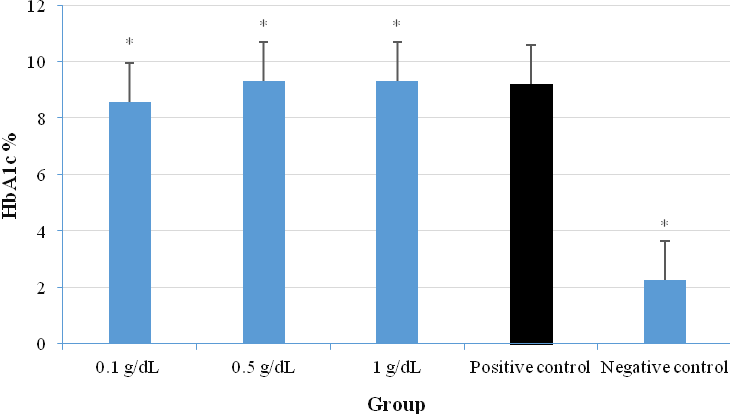
Figure 1. Mean ± standard deviation of HbA1c formation after 7 days at 20 mM glucose under treatment with different concentrations of hydroalcoholic P. atlantica fruit extract. An asterisk indicates a statistically significant difference from the positive control.
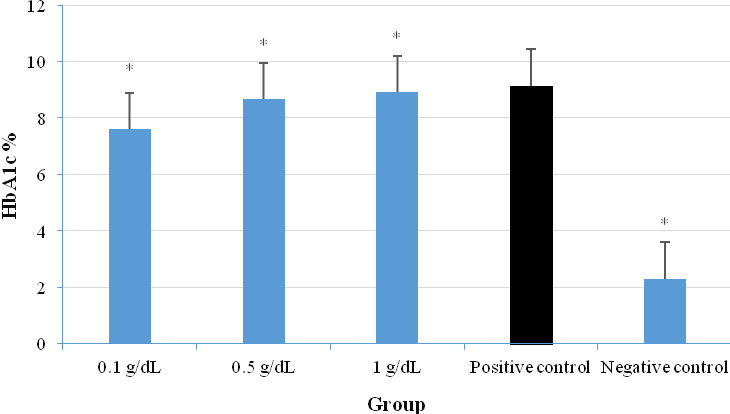
Figure 2. Mean ± standard deviation of HbA1c formation after 14 days at 20 mM glucose under treatment with different concentrations of hydroalcoholic P. atlantica fruit extract. An asterisk indicates a statistically significant difference from the positive control.
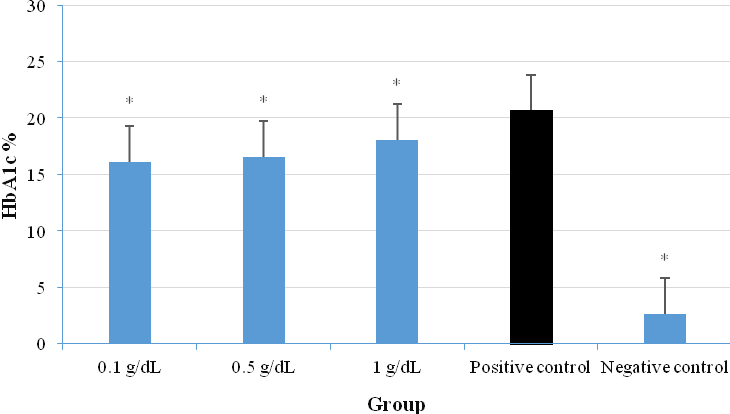
Figure 3. Mean ± standard deviation of HbA1c formation after 7 days at 40 mM glucose under treatment with different concentrations of hydroalcoholic P. atlantica fruit extract. An asterisk indicates a statistically significant difference from the positive control.
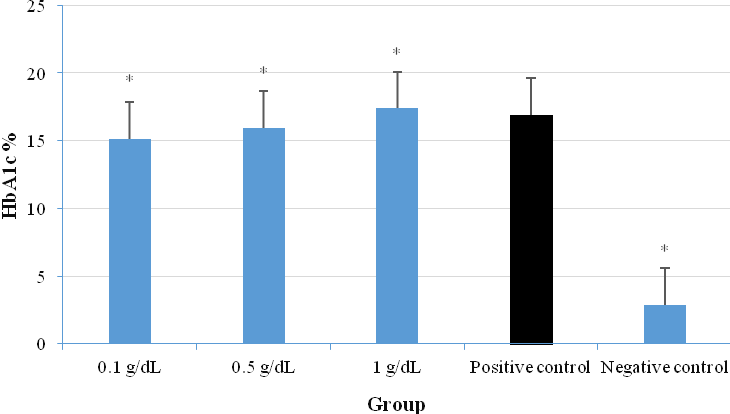
Figure 4. Mean ± standard deviation of HbA1c formation after 14 days at 40 mM glucose under treatment with different concentrations of hydroalcoholic P. atlantica fruit extract. An asterisk indicates a statistically significant difference from the positive control.
Table 2. Summary of the effects of different concentrations of P. atlantica hydroalcoholic extract on HbA1c levels under hyperglycemic conditions
Glucose (mM) | Incubation (days) | Extract (g/dL) | HbA1c (%; mean ± SD) | Change vs. positive control | P-value |
|---|---|---|---|---|---|
20 | 7 | Positive control | 9.22 ± 0.106 | — | — |
20 | 7 | 0.1 | 8.56 ± 0.071 | ↓ 7.16% | P<0.05 |
20 | 7 | 0.5 | 9.32 ± 0.070 | ↑ 1.08% | P<0.05 |
20 | 7 | 1 | 9.32 ± 0.070 | ↑ 1.08% | P<0.05 |
20 | 14 | Positive control | 9.15 ± 0.089 | — | — |
20 | 14 | 0.1 | 7.62 ± 0.070 | ↓ 16.72% | P<0.05 |
20 | 14 | 0.5 | 8.66 ± 0.071 | ↓ 5.35% | P<0.05 |
20 | 14 | 1 | 8.91 ± 0.134 | ↓ 2.62% | P<0.05 |
40 | 7 | Positive control | 20.68 ± 0.254 | — | — |
40 | 7 | 0.1 | 16.12 ± 0.073 | ↓ 22.04% | P<0.05 |
40 | 7 | 0.5 | 16.57 ± 0.098 | ↓ 19.87% | P<0.05 |
40 | 7 | 1 | 18.07 ± 0.113 | ↓ 12.62% | P<0.05 |
40 | 14 | Positive control | 16.86 ± 0.141 | — | — |
40 | 14 | 0.1 | 15.11 ± 0.149 | ↓ 10.38% | P<0.05 |
40 | 14 | 0.5 | 15.94 ± 0.049 | ↓ 5.46% | P<0.05 |
40 | 14 | 1 | 17.37 ± 0.042 | ↑ 3.03% | P<0.05 |
The downward arrow (↓) indicates a decrease and the upward arrow (↑) indicates an increase in HbA1c relative to the positive control.
Discussion
Glucose concentration and the duration of exposure to hemoglobin are two important factors influencing the Maillard reaction. Increasing glucose concentration may weaken heme–globin interactions and induce structural changes in the hemoglobin molecule, which can alter light absorption (9). In the present study, hemoglobin glycation was therefore evaluated in the presence and absence of different concentrations of hydroalcoholic P. atlantica fruit extract. Antidiabetic effects of P. atlantica have previously been reported in humans and rats (16, 15, 11). Because the primary variable in the present study was HbA1c formation following experimentally increased glucose exposure, the experiment was designed to assess the direct effect of the fruit extract under in vitro conditions.
At 20 mM glucose, HbA1c values differed significantly from the positive control across extract concentrations and incubation periods. After 7 days, however, a significant reduction was observed only at 0.1 g/dL. Extending incubation from 7 to 14 days increased the apparent modulatory effect, and all three extract concentrations were associated with significantly lower HbA1c than the positive control. At 40 mM glucose, all extract concentrations significantly reduced HbA1c after 7 days. After 14 days, significant reductions remained at 0.1 and 0.5 g/dL, whereas the 1 g/dL concentration did not reduce HbA1c relative to the positive control (Table 2). These findings suggest that exposure duration and the concentration of extract influence the extent of hemoglobin glycation. The Maillard reaction is non-enzymatic, and the concentrations of glucose, extract, and hemoglobin may directly affect HbA1c formation (7).
The findings are consistent with previous reports describing inhibitory effects of plant extracts on hemoglobin glycation. Fattahpour et al. reported that hydroalcoholic garlic extract significantly reduced glycated hemoglobin formation in vitro (7). Karimabad et al. also reported an inhibitory effect of Citrullus colocynthis extract on HbA1c formation under laboratory conditions (8). Similar findings suggest that bioactive constituents of medicinal plants may modulate early stages of hemoglobin glycation.
The hydroalcoholic extract of P. atlantica fruit may reduce HbA1c formation through several complementary mechanisms. One possibility is direct inhibition of non-enzymatic glycation through interactions of polyphenolic constituents with carbonyl groups of reducing sugars or amino groups of proteins. In addition, antioxidant constituents may reduce reactive oxygen species and thereby limit oxidative reactions associated with the progression of glycation. Previous studies have reported terpenoid and polyphenolic constituents with antioxidant properties in P. atlantica, which may contribute to the observed effect (16). Taken together, the present findings and proposed mechanisms support the potential of P. atlantica fruit extract as a plant-derived agent that may influence early stages of hemoglobin glycation.
In vivo antidiabetic effects of P. atlantica have also been investigated in patients with diabetes. Two studies reported significant reductions in HbA1c in patients receiving P. atlantica preparations (18, 17), findings that are broadly consistent with the direction of the present results. Other investigations have examined the effects of P. atlantica on additional blood parameters related to glucose regulation. In one study, inhibitory effects on enzymes involved in carbohydrate digestion and absorption in humans were reported (10). Another study confirmed beneficial effects on blood glucose and related histopathological indices in diabetic mice (19).
The 0.1 g/dL concentration was the most effective dose for reducing HbA1c formation in the present experiment. At higher concentrations, the inhibitory effect was attenuated and, under some conditions, HbA1c was higher than in the positive control (Table 2). The reduced efficacy at 1 g/dL may have several explanations. Non-specific interactions between extract constituents, particularly polyphenols, and hemoglobin may produce protein–polyphenol complexes, potentially causing structural changes, reducing the accessibility of reactive hemoglobin groups, or promoting insoluble aggregation. However, because these interactions were not directly examined in this study, this explanation remains a hypothesis. Changes in the oxidation–reduction potential of the reaction environment at higher extract concentrations may also have influenced the results (22, 21, 20). Further investigations using UV–Vis spectroscopy, fluorescence, or other biophysical methods could help clarify the mechanism of action and interactions between the extract and hemoglobin.
The decrease in HbA1c observed in the positive control at day 14 compared with day 7 may have resulted from spontaneous degradation of glycosylated bonds, structural changes in hemoglobin during prolonged incubation, or a reduction in the effective glucose concentration in the reaction medium. Glucose concentrations were not monitored throughout incubation, and protease inhibitors were not used; these factors should be considered limitations. Future studies should control incubation conditions more closely, including periodic measurement of glucose concentration and use of protease inhibitors, to assess hemoglobin structural stability and the reliability of glycation measurements.
Direct measurement of AGEs was not performed in this study. Although HbA1c is an early glycation marker and a precursor associated with Hb-AGE formation, direct AGE assays using fluorescence-based methods or ELISA would provide a more precise assessment of the effects of the plant extract on later stages of glycation. Another limitation was the absence of phytochemical characterization of the hydroalcoholic fruit extract, which prevented identification and quantification of the bioactive constituents responsible for the observed effects. Previous studies have shown that P. atlantica contains appreciable amounts of polyphenolic, flavonoid, and terpenoid compounds, including α-pinene and β-caryophyllene, with antioxidant and antiglycation properties (10). The observed reduction in HbA1c may therefore reflect the combined activity of several constituents. Future studies should use methods such as HPLC or GC–MS to identify active compounds and investigate their direct relationship with inhibition of glycation.
Conclusion
The results of this study indicate that hydroalcoholic extract of P. atlantica fruit can significantly reduce HbA1c formation in human blood-derived samples under in vitro conditions. The preliminary findings suggest that the fruit extract may modulate the formation of AGEs, which are involved in the secondary complications of chronic hyperglycemia. Further investigations are required before the extract can be considered for use as part of a dietary or pharmacological regimen. These studies should include clinical trials to identify an effective in vivo concentration, evaluate potential clinical adverse effects, and assess other relevant parameters.
Ethical Considerations
Compliance with Ethical Guidelines
This study was approved by the Research Ethics Committee of Islamic Azad University, Shahrekord Branch, Iran (Ethical No. IR.IAU.SHK.REC.1403.096).
Funding
This article received no financial support.
Authors’ Contributions
All authors contributed equally to the conceptualization and writing of the manuscript and approved the final version.
Conflicts of Interest
The authors declared that they had no conflict of interest related to this research.
Acknowledgments
This article is based on part of the results of the first author’s professional doctoral thesis. The authors sincerely thank the staff of the Laboratory Complex at Islamic Azad University, Shahrekord Branch, and all individuals who assisted at different stages of the study.
References
- Rooney MR, Rawlings AM, Pankow JS, Tcheugui JBE, Coresh J, Sharrett AR, et al. Risk of progression to diabetes among older adults with prediabetes. JAMA Intern Med. 2021;181(4):511–519. doi: 10.1001/jamainternmed.2020.8774. pmid
- Yu MG, Gordin D, Fu J, Park K, Li Q, King GL. Protective factors and the pathogenesis of complications in diabetes. Endocr Rev. 2024;45(2):227–252. doi: 10.1210/endrev/bnad030. pmid
- Sourris KC, Watson A, Jandeleit-Dahm K. Inhibitors of advanced glycation end product (AGE) formation and accumulation. Handb Exp Pharmacol. 2021;264:395–423. doi: 10.1007/164_2020_391. pmid
- Jia W, Guo A, Zhang R, Shi L. Mechanism of natural antioxidants regulating advanced glycosylation end products of Maillard reaction. Food Chem. 2023;404:134541. doi: 10.1016/j.foodchem.2022.134541. pmid
- Wolffenbuttel BH, Giordano D, Founds HW, Bucala R. Long-term assessment of glucose control by haemoglobin-AGE measurement. Lancet. 1996;347(9000):513–515. doi: 10.1016/s0140-6736(96)91141-1. pmid
- Yousof Ali M, Jannat S, Mizanur Rahman M. Ginsenoside derivatives inhibit advanced glycation end-product formation and glucose–fructose mediated protein glycation in vitro via a specific structure–activity relationship. Bioorg Chem. 2021;111:104844. doi: 10.1016/j.bioorg.2021.104844. pmid
- Fattahpour S, Hosseini F, Hajizadeh MR, Asadpour M, Hassanshahi Gh, Mirzaii MR, et al. Surveying the effect of hydroalcoholic extract of Allium hirtifolium on glycated hemoglobin formation in in-vitro condition. J Adv Biomed Sci. 2015;5(1):92–101. [Persian]. Link
- Karimabad MN, Niknia S, Golnabadi MB, Poor SF, Hajizadeh MR. Effect of Citrullus colocynthis extract on glycated hemoglobin formation (in vitro). Eurasian J Med. 2020;52(1):47–51. doi: 10.5152/eurasianjmed.2020.19223. pmid
- Soleimani M, Shahanipour K. Hydroalcoholic extracts effect of Rosa damascena Mill and Anethum graveolens on the proteins glycosylation in vitro. J Med Plants. 2017;16(62):108–119. [Persian]. Link
- Pekacar S, Deliorman Orhan D. Investigation of antidiabetic effect of Pistacia atlantica leaves by activity-guided fractionation and phytochemical content analysis by LC-QTOF-MS. Front Pharmacol. 2022;25(13):826261. doi: 10.3389/fphar.2022.826261. pmid
- Memariani Z, Tatari M, Zahedi M, Hesari Z, Davarian A, Kolangi F. Evaluation of the effect of Pistacia atlantica oleoresin on blood sugar, pressure and lipids in patients with type 2 diabetes: a single-blind, placebo-controlled trial. Endocrinol Diabetes Metab. 2024;7(4):e504. doi: 10.1002/edm2.504. pmid
- Ghafouri-Khosrowshahi A, Farzami B, Mohammadi-Bardbori A. The inhibitory effect of garlic extract on formation of glycated hemoglobin and AGEPs. J Med Sci. 2007;7(6):1039–1043. doi: 10.3923/jms.2007.1039.1043
- Lipovac V, Gavella M, Sverko V. Effect of sialic acid on glycation-induced fluorescence of albumin. Acta Diabetol. 1994;31(3):156–159. doi: 10.1007/BF00570371. pmid
- Shah SC, Malone JI, Harvey C. Glycosylated hemoglobin: colorimetric vs chromatographic measurement. Diabetes Res. 1986;3(7):381–386. pmid
- Raziani Y, Qadir SH, Hermis AH, Nazari A, Othman BS, Raziani S. Pistacia atlantica as an effective remedy for diabetes: a randomised, double-blind, placebo-controlled trial. Aust J Herbal Nat Med. 2022;34(3):118–124. doi: 10.33235/ajhnm.34.3.118-124
- Yaseen Al-Edany ZT, Alhelfi N, Pirnia M. The therapeutic effects of Pistacia atlantica used in foods: a review. J Food Sci Technol (Iran). 2025;21(155):148–169. Link
- Mahjoub F, Salari R, Yousefi M, Mohebbi M, Saki A, Rezayat KA. Effect of Pistacia atlantica kurdica gum on diabetic gastroparesis symptoms: a randomized, triple-blind placebo-controlled clinical trial. Electron Physician. 2018;10(7):6997–7007. doi: 10.19082/6997. pmid
- Majd FS, Talebi SS, Ahmad Abadi AN, Poorolajal J, Dastan D. Efficacy of a standardized herbal product from Pistacia atlantica subsp. Kurdica in type 2 diabetic patients with hyperlipidemia: a triple-blind randomized clinical trial. Complement Ther Clin Pract. 2022;48:101613. doi: 10.1016/j.ctcp.2022.101613. pmid
- Hashemnia M, Nikousefat Z, Yazdani-Rostam M. Antidiabetic effect of Pistacia atlantica and Amygdalus scoparia in streptozotocin-induced diabetic mice. Comp Clin Pathol. 2015;24(6):1301–1306. Link
- Cyboran S, Oszmiański J, Kleszczyńska H. Interaction between plant polyphenols and the erythrocyte membrane. Cell Mol Biol Lett. 2012;17(1):77–88. doi: 10.2478/s11658-011-0038-4. pmid
- Xi J, Guo R. Interactions between flavonoids and hemoglobin in lecithin liposomes. Int J Biol Macromol. 2007;40(4):305–311. doi: 10.1016/j.ijbiomac.2006.08.011. pmid
- Yan X, Zhang G, Zhao J, Ma M, Bao X, Zeng Z, et al. Influence of phenolic compounds on the structural characteristics, functional properties and antioxidant activities of Alcalase-hydrolyzed protein isolate from Cinnamomum camphora seed kernel. LWT. 2021;148:111799. doi: 10.1016/j.lwt.2021.111799